


How Die-Casting Parts Enhance the Efficiency of Medical Tools
Table of Contents
- 1. Introduction to Die-Casting in Medical Tools
- 2. What is Die-Casting?
- 3. Benefits of Die-Casting in Medical Tools
- 4. Precision and Quality: Key Factors in Medical Devices
- 5. Cost Efficiency through Die-Casting
- 6. Application of Die-Casting in Medical Tools
- 7. Future Trends in Die-Casting for Medical Devices
- 8. Conclusion
- 9. FAQs
1. Introduction to Die-Casting in Medical Tools
In the ever-evolving landscape of healthcare, the efficiency of medical tools plays a critical role in patient outcomes and the overall effectiveness of treatment methodologies. **Die-casting** has emerged as a pivotal manufacturing process that significantly enhances the efficiency and reliability of medical devices. By utilizing this advanced technique, manufacturers can produce high-quality components that meet the stringent requirements of the medical industry.
This article delves into how die-casting parts contribute to the efficiency of medical tools, exploring various aspects such as precision, cost-effectiveness, applications, and future innovations.
2. What is Die-Casting?
Die-casting is a manufacturing process that involves forcing molten metal into a mold cavity under high pressure. This method allows for the creation of complex shapes with high dimensional accuracy. Commonly used metals in die-casting include aluminum, zinc, and magnesium, which possess excellent fluidity, strength, and corrosion resistance.
The die-casting process can be categorized into two main types: **hot chamber die-casting** and **cold chamber die-casting**. Hot chamber die-casting is typically utilized for metals with lower melting points, while cold chamber die-casting is suitable for higher melting point metals. Both methods ensure that the final product meets the rigorous standards required for medical applications.
3. Benefits of Die-Casting in Medical Tools
The integration of die-casting in the manufacturing of medical tools offers numerous advantages. These benefits not only enhance the functionality of medical devices but also contribute to the overall efficiency of healthcare delivery.
3.1 Enhanced Precision and Accuracy
One of the most significant benefits of die-casting is its ability to produce parts with exceptional precision. This is crucial in the medical field, where even the slightest deviation can lead to serious consequences. The high-pressure process ensures that the molten metal fills the mold entirely, resulting in components that fit together perfectly.
3.2 Improved Surface Finish
Die-casting produces parts with a smooth surface finish, which is vital for medical tools used in surgical procedures. A smooth finish not only enhances the aesthetic appeal but also minimizes the risk of bacterial growth on the surfaces, promoting better hygiene and safety.
3.3 Complex Geometries
Medical devices often require intricate designs that standard manufacturing processes cannot achieve. Die-casting allows for the creation of complex geometries, enabling the production of innovative medical tools that can enhance patient care.
3.4 Rapid Production Rates
In the fast-paced medical industry, the ability to produce components quickly is essential. Die-casting offers rapid production rates, allowing manufacturers to meet urgent demands without compromising on quality.
4. Precision and Quality: Key Factors in Medical Devices
The healthcare sector places an unwavering emphasis on precision and quality. Medical tools must adhere to strict regulatory standards to ensure safety and efficacy. Die-casting contributes to this by providing:
4.1 Consistent Quality Control
The die-casting process allows for rigorous quality control at various stages of production. Manufacturers can monitor the entire process, ensuring that each component meets the required specifications and quality standards.
4.2 Reduced Tolerance Levels
With die-casting, manufacturers can achieve tighter tolerance levels, which is especially important for devices that require precise measurements. This capability minimizes the likelihood of errors during assembly and enhances the overall reliability of medical tools.
5. Cost Efficiency through Die-Casting
Cost efficiency is a paramount concern in medical device manufacturing. Die-casting provides several financial advantages that contribute to the overall profitability of medical tools:
5.1 Lower Material Waste
The die-casting process is highly efficient in terms of material usage. With minimal waste generation, manufacturers can optimize their resource allocation, leading to cost savings.
5.2 Decreased Labor Costs
Die-casting is often a highly automated process, which reduces the need for extensive manual labor. This automation not only speeds up production but also decreases labor costs, making it a financially attractive option for manufacturers.
5.3 Long-Term Durability
Components produced through die-casting are known for their durability. By investing in long-lasting parts, healthcare providers can reduce maintenance costs and improve the longevity of medical devices.
6. Application of Die-Casting in Medical Tools
Die-casting finds extensive applications in various medical tools and devices. Some notable examples include:
6.1 Surgical Instruments
Surgical instruments require high precision and reliability. Die-casting allows for the production of components such as handles, grips, and other intricate parts that are essential for functionality.
6.2 Diagnostic Equipment
Die-casting is also employed in the manufacturing of diagnostic equipment, including MRI machines and ultrasound devices. The high-quality components produced through die-casting contribute to the accuracy and reliability of diagnostic results.
6.3 Prosthetics and Implants
In the realm of prosthetics and implants, die-casting enables the creation of custom components that fit individual patient needs. This customization enhances patient comfort and improves the overall effectiveness of the devices.
7. Future Trends in Die-Casting for Medical Devices
As technology continues to advance, the die-casting industry is also evolving. Several trends are shaping the future of die-casting in medical devices:
7.1 Integration of Smart Technologies
The integration of smart technologies, such as IoT and AI, is poised to revolutionize die-casting processes. Smart manufacturing can enhance precision, streamline production, and enable predictive maintenance for die-casting equipment.
7.2 Sustainable Manufacturing Practices
Sustainability is becoming increasingly important in the manufacturing sector. Die-casting companies are exploring eco-friendly materials and practices to reduce their carbon footprint while maintaining high-quality production.
7.3 Customization through 3D Printing
The relationship between die-casting and 3D printing is growing stronger. Manufacturers are exploring hybrid approaches that combine the precision of die-casting with the flexibility of 3D printing, allowing for customized medical tools that meet specific patient needs.
8. Conclusion
Die-casting is a transformative process that significantly enhances the efficiency of medical tools. By enabling high precision, improved surface finishes, and rapid production rates, die-casting meets the rigorous demands of the healthcare industry. As technology advances, the integration of smart technologies and sustainable practices will further propel the effectiveness of die-cast medical devices, ensuring they meet the evolving needs of healthcare providers and patients alike.
9. FAQs
Q1: What are the main advantages of using die-casting in medical tools?
A1: Die-casting offers enhanced precision, improved surface finishes, rapid production rates, and cost efficiency, making it ideal for manufacturing medical tools.
Q2: How does die-casting improve the accuracy of medical devices?
A2: The high-pressure process of die-casting ensures that molten metal fills the mold completely, resulting in parts with tight tolerances and excellent dimensional accuracy.
Q3: What types of medical tools are commonly manufactured using die-casting?
A3: Die-casting is used for surgical instruments, diagnostic equipment, prosthetics, and implants, among other medical tools.
Q4: What is the environmental impact of die-casting?
A4: Die-casting can have a lower environmental impact due to reduced material waste and the potential for sustainable practices. Manufacturers are increasingly adopting eco-friendly materials and processes.
Q5: How is technology shaping the future of die-casting in medical devices?
A5: The integration of smart technologies, sustainable practices, and customization through 3D printing are key trends shaping the future of die-casting in the medical field.


Dalian Sakabe was invited to participate in the Dalian investment promotion project ceremony
On March 27, 2025, Dalian Sakabe, as an advanced foreign-funded enterprise in Dalian, was invited to participate in the investment promotion project ceremony of Dalian China.
2025/04/01

It is pleased that partner NME come to visit us Sakabe foundry
It is pleased that partner NME come to visit us Sakabe foundry. We share the same philosophy about quality standards, product positioning, environmental protection, and sustainable development. It's lucky to meet like-minded partners!
2025/02/19
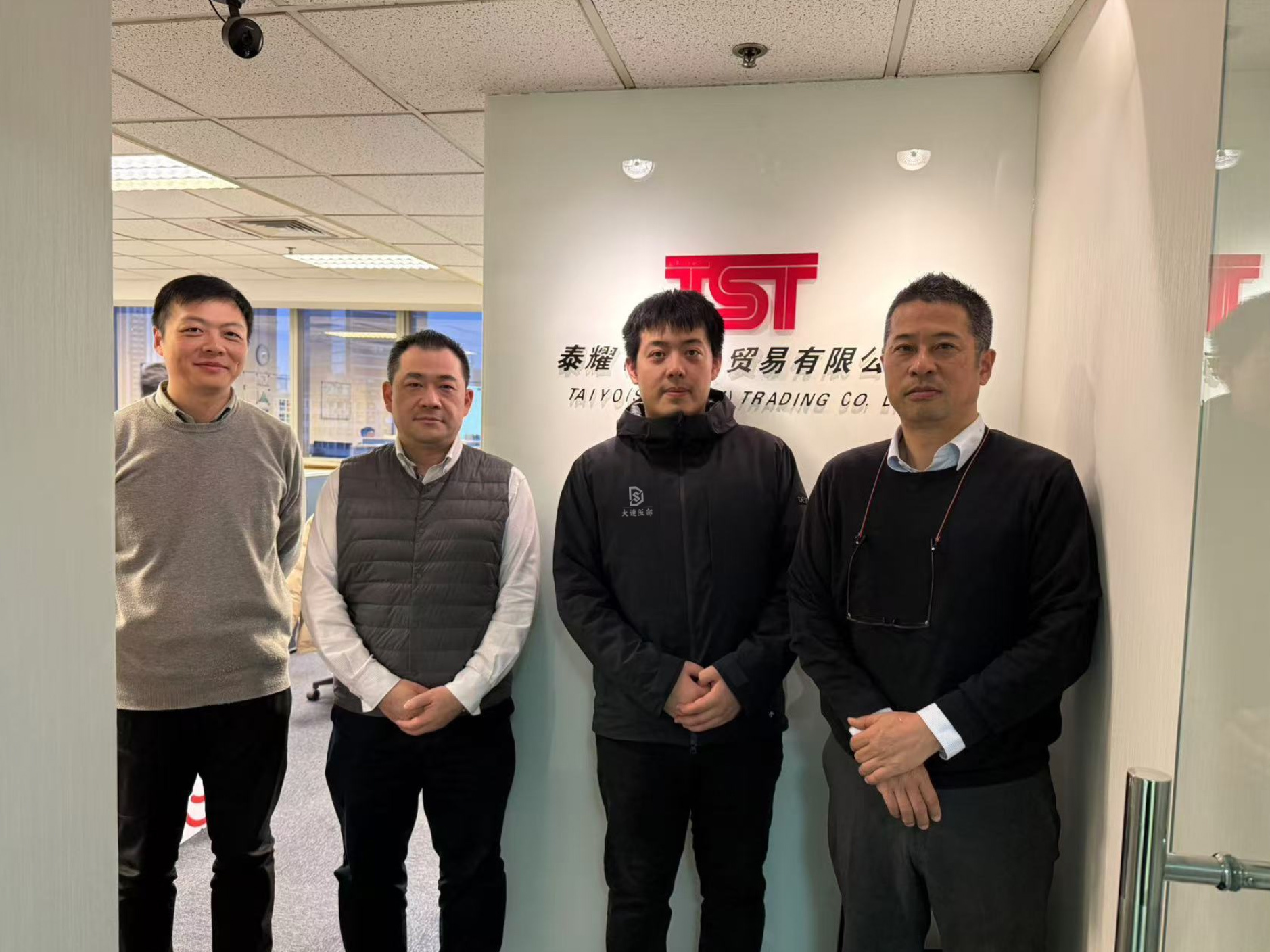
Great meeting with partner in Shanghai
Dalian Sakabe paying visit to our partner TST in Shanghai. Had discussions and plans for long term co-operation. Great thanks for your support!
2025/01/02
CONTACT US
Tel: +86 136-5494-1611
E-mail: alexzheng@sakabe.cn
Office Address:
No.18 Dongbei Qi Street, Jinpu New Area, Dalian, Liaoning, China
Factory Address:
No.26 Fuan Street, Jinpu New Area, Dalian, Liaoning, China
