


Unlocking the Benefits of the Newest Precision Casting Tooling in Heat Treatment
1. Introduction to Precision Casting Tooling
The realm of manufacturing has evolved significantly, especially in processes such as heat treatment. **Precision casting tooling** plays a pivotal role in enhancing these processes. By utilizing advanced materials and techniques, manufacturers can achieve greater accuracy and efficiency. The newest Precision casting tooling for heat treatment is designed to withstand extreme conditions, allowing for improved performance and reduced waste. As industries strive for higher quality standards, understanding the benefits of these tools becomes essential.
2. Importance of Heat Treatment in Manufacturing
Heat treatment is a crucial process in metallurgy aimed at altering the physical and sometimes chemical properties of a material. By applying heat, followed by controlled cooling, manufacturers can improve hardness, ductility, and strength. This process is vital in industries such as automotive, aerospace, and heavy machinery, where component reliability is non-negotiable. The integration of precision casting tooling into heat treatment processes enhances these attributes, leading to superior products.
3. The Newest Techniques in Precision Casting Tooling
Recent advancements in **precision casting** have introduced several innovative techniques. Among these are:
3.1. 3D Printing Integration
3D printing technology allows for faster prototyping of casting tools. By producing molds with intricate designs, manufacturers can optimize heat treatment processes, ensuring uniform heating and cooling.
3.2. Advanced Materials
The introduction of new alloys and composite materials has revolutionized the durability and performance of casting tools. These materials can resist thermal deformation and oxidation, which are critical in heat treatment environments.
3.3. Process Automation
The automation of casting processes reduces human error and increases production speed. Automated systems provide consistent quality, an essential factor in heat treatment applications.
4. Key Benefits of Advanced Precision Casting Tooling
The transition to advanced precision casting tooling brings numerous advantages:
4.1. Enhanced Efficiency
With improved designs and materials, precision casting tools operate more efficiently than traditional methods. Reduced cycle times in heat treatment processes allow for higher throughput.
4.2. Improved Product Quality
The precision achieved through modern tooling leads to better surface finishes and dimensional accuracy. This directly translates to higher-quality end products, which meet strict industry standards.
4.3. Cost Reduction
Although the initial investment in advanced tooling may be higher, the long-term savings are significant. Reduced waste, lower energy consumption, and decreased labor costs contribute to overall cost efficiency.
4.4. Environmental Benefits
Modern precision casting techniques often utilize sustainable practices that minimize environmental impact. These tools can optimize material usage, thereby reducing the carbon footprint associated with manufacturing.
5. Applications of Precision Casting Tooling in Heat Treatment
Precision casting tooling finds a wide array of applications across different sectors:
5.1. Aerospace Industry
In aerospace, precision is paramount. Components subjected to extreme conditions benefit from advanced casting tools, ensuring reliability and safety.
5.2. Automotive Manufacturing
The automotive industry relies on precision casting for engine components and transmission parts. Enhanced heat treatment processes improve the durability of these critical components.
5.3. Medical Devices
Precision casting plays a vital role in producing medical instruments and devices. The highest standards of quality and safety are non-negotiable in this field.
6. Case Studies: Success Stories in Precision Casting
Analyzing real-world applications provides insight into the effectiveness of advanced precision casting tooling.
6.1. Aerospace Component Manufacturing
A leading aerospace manufacturer implemented precision casting tooling, resulting in a 30% reduction in cycle time for heat treatment processes. This shift improved product delivery times and customer satisfaction.
6.2. Automotive Parts Production
An automotive parts supplier adopted advanced tooling techniques, which led to a 20% decrease in material waste during production. Enhanced durability of components resulted in fewer recalls and greater consumer trust.
7. Future Trends in Precision Casting Tooling Technology
As technology continues to evolve, several trends are emerging in precision casting tooling:
7.1. Increased Use of AI and Machine Learning
Artificial intelligence is poised to enhance precision casting processes by analyzing data to optimize production parameters.
7.2. Enhanced Customization
The ability to customize tooling for specific applications will become more prevalent, allowing manufacturers to tailor their processes to unique requirements.
7.3. Sustainability Initiatives
The push for greener manufacturing methods will drive the development of eco-friendly materials and processes in precision casting.
The advancements in precision casting tooling have revolutionized heat treatment processes across various industries. By embracing the latest technologies and innovative techniques, manufacturers can achieve significant improvements in efficiency, product quality, and cost-effectiveness. As we move towards a more sustainable future, the integration of precision casting tooling will play a critical role in shaping the landscape of manufacturing. Understanding and leveraging these tools will empower businesses to meet the challenges of modern production demands while ensuring superior product performance.

Introduction to investment casting manufacturing technique
Investment casting, also known as wax loss casting, is a long-standing metal forming process. The copper ban during the Spring and Autumn period in China was the earliest known lost wax casting method. The first step is to make a mold, using the mold to inject liquid wax into the mold to form a wax mold. Then, the wax mold is pasted into a pouring system according to the casting process, and the entire pouring system is made into a silica sol shell. After dewaxing, the entire shell becomes a cavity, and the cavity shell can be poured with molten steel after calcination. After cooling, the steel material product is formed. Subsequently, through processes such as cutting and grinding, sandblasting, heat treatment, correction, welding repair, electroplating, and machining, the cast products required by the customer are formed.
2024/10/08

Dalian is a beautiful coastal city in Northeast China, with beautiful scenery and pleasant climate. It is an important industrial production base, an international shipping center in Northeast Asia.
2024/07/11
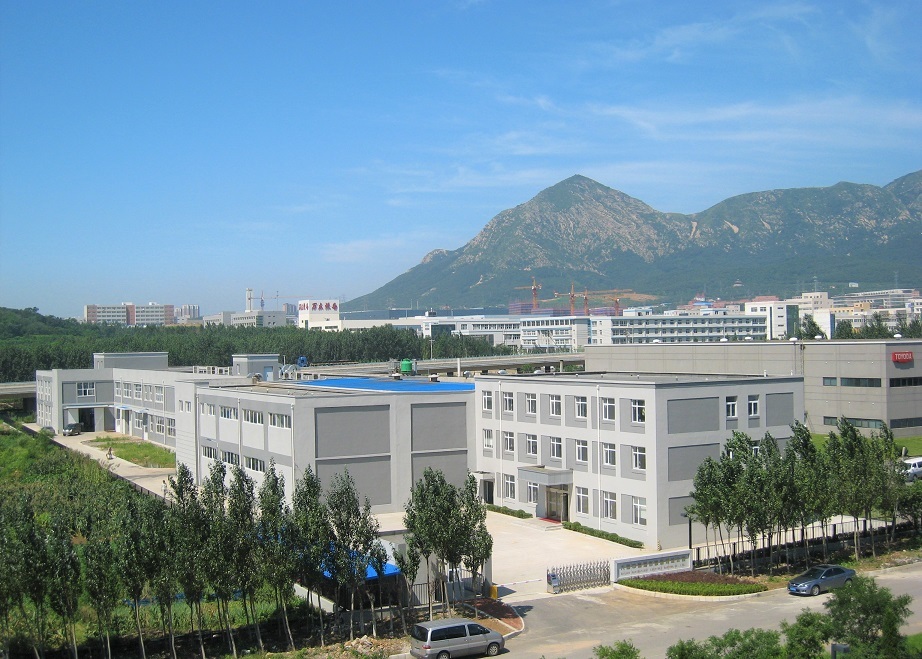
Dalian Sakabe has own foundry factory and focus on providing high-quality precision casting products to domestic and foreign customers since its establishment in 2005.
2024/10/08
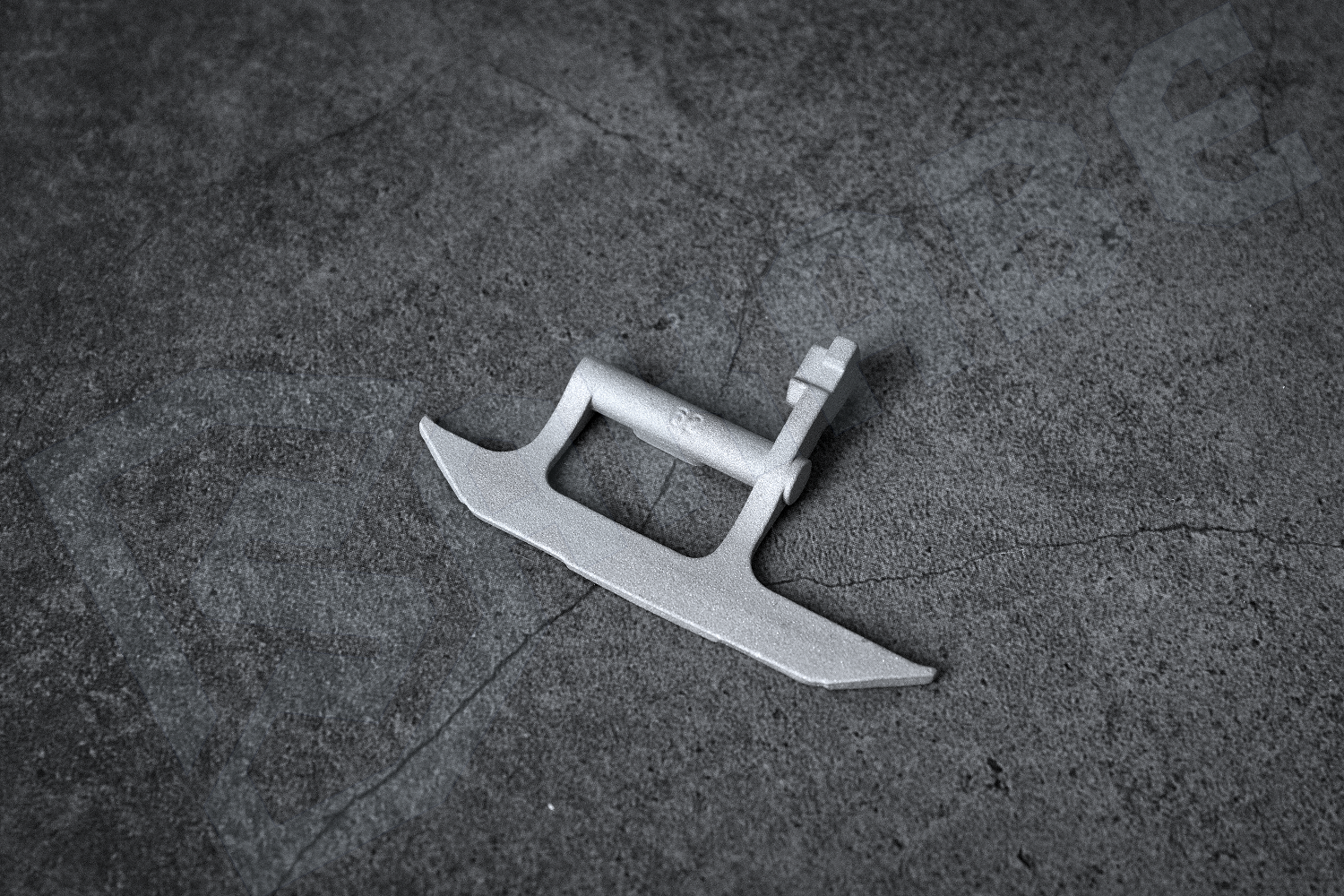
The Crucial Role of Casting Material Trays in Advanced Manufacturing
In the ever-evolving landscape of manufacturing, optimizing heat treatment processes through the strategic use of casting material trays is paramount
2025/09/19
CONTACT US
Tel: +86 136-5494-1611
E-mail: alexzheng@sakabe.cn
Office Address:
No.18 Dongbei Qi Street, Jinpu New Area, Dalian, Liaoning, China
Factory Address:
No.26 Fuan Street, Jinpu New Area, Dalian, Liaoning, China
