


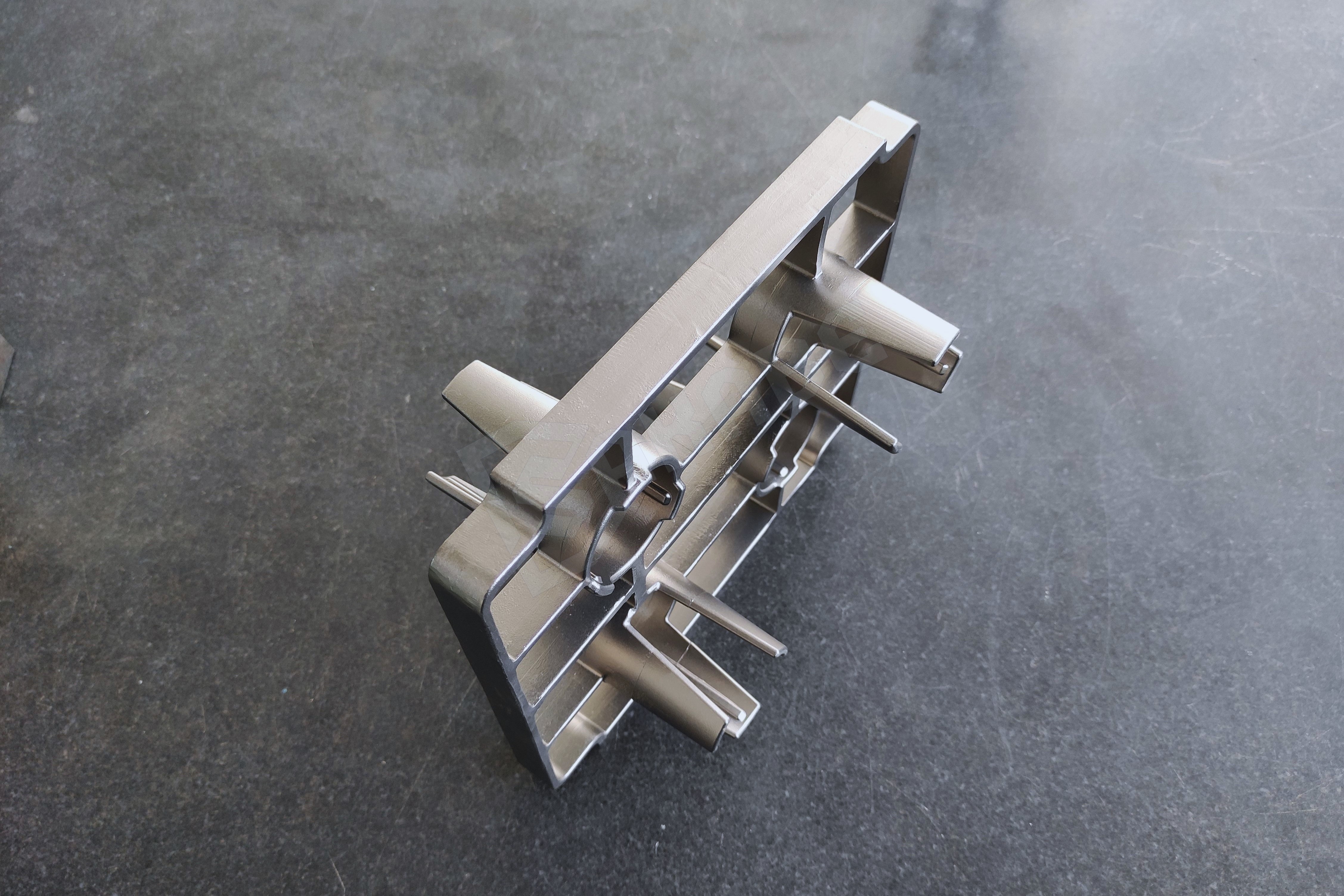
When considering casting for heat treatment material trays and frames, one must focus on the selection of suitable materials. Commonly used materials include aluminum, stainless steel, and various alloys, each possessing unique thermal properties and resistance to deformation at high temperatures. For example, aluminum offers excellent thermal conductivity, making it ideal for applications where rapid heat distribution is essential. Conversely, stainless steel, with its superior strength and corrosion resistance, is often preferred in environments subjected to harsh conditions.
Another critical aspect of casting optimization involves the design of the trays and frames. The geometry must be carefully considered to facilitate uniform heat distribution during the heat treatment process. This includes factors such as wall thickness, surface area, and structural reinforcement. Employing advanced computer-aided design (CAD) tools can assist in creating more efficient designs that minimize stress concentrations and maximize thermal performance.
Furthermore, the casting process itself requires meticulous attention to detail. Techniques such as sand casting, investment casting, and die casting each have their advantages and limitations. For heat treatment trays and frames, sand casting is often favored for its versatility and cost-effectiveness, while investment casting may be chosen for intricate designs that demand high precision. Understanding the specific requirements of your application will guide you in selecting the most appropriate casting technique.
Post-casting treatments also play a significant role in enhancing the properties of heat treatment material trays and frames. Processes such as heat treatment, surface finishing, and coating can significantly improve wear resistance, strength, and overall performance. Implementing these additional processes can create products that not only meet but exceed industry standards.
In conclusion, optimizing casting for heat treatment material trays and frames involves a comprehensive understanding of material selection, design considerations, and process optimization. By leveraging the latest advancements in casting technology and staying abreast of industry best practices, manufacturers can improve the efficiency, durability, and quality of their heat treatment solutions. As the manufacturing landscape evolves, embracing these strategies will be crucial for maintaining a competitive edge in the marketplace.
Enhancing Food Machinery with Durable Precision Machining Solutions
Durable Precision machining of food machinery accessories plays an integral role in the food machinery sector by ensuring that equipment is produced with the highest standards of accuracy and reliability
2025/07/23

Unlocking Efficiency: Advanced Precision Casting Techniques in Food Machinery
Advanced precision casting techniques are transforming the landscape of food machinery manufacturing. Their ability to enhance efficiency, quality, and sustainability positions them as a critical factor in the industry’s future
2025/07/23

Enhancing Textile Machinery Efficiency through Quality Precision Casting
Quality precision casting is a cornerstone of effective textile machinery manufacturing. By leveraging advanced casting techniques, selecting appropriate materials, and maintaining rigorous quality checks, manufacturers can produce reliable, high-performance machinery components
2025/07/23

Unlocking Efficiency: The Best Casting Techniques for Heat Treatment Material Trays
Optimizing casting techniques for heat treatment material trays is essential for achieving efficiency and quality in manufacturing
2025/07/23
CONTACT US
Tel: +86 136-5494-1611
E-mail: alexzheng@sakabe.cn
Office Address:
No.18 Dongbei Qi Street, Jinpu New Area, Dalian, Liaoning, China
Factory Address:
No.26 Fuan Street, Jinpu New Area, Dalian, Liaoning, China
