

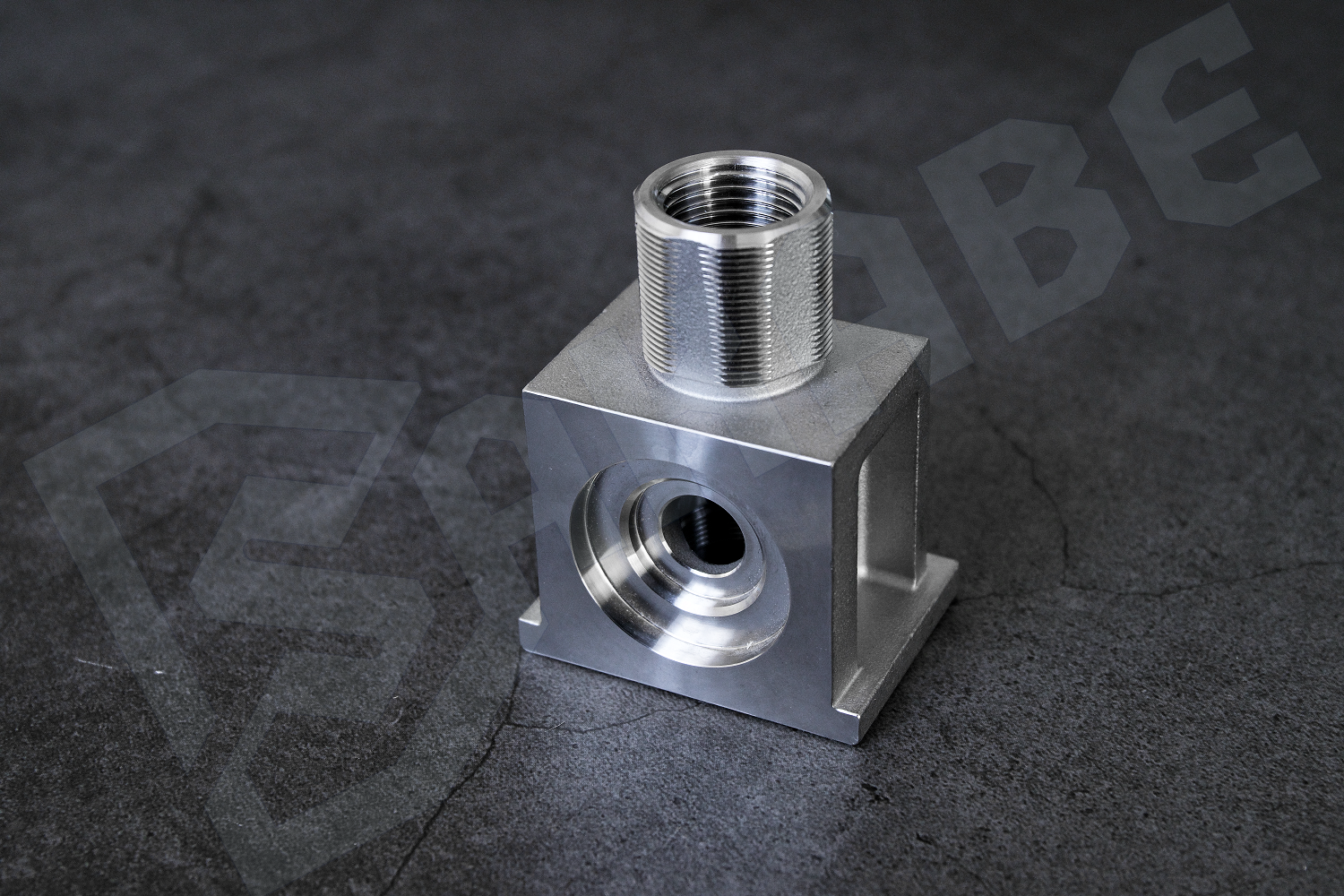
One of the primary benefits of precision casting for food machinery accessories is its ability to produce components with exceptional dimensional accuracy. In an industry where even the slightest deviation can lead to operational inefficiencies or safety hazards, precision casting ensures that every part is crafted to exact specifications. This accuracy is crucial for components such as conveyor systems, mixers, and other machinery that require seamless integration and functionality.
Additionally, precision casting allows for the production of complex geometries that would be difficult or impossible to achieve with traditional machining methods. This capability enables manufacturers to design more efficient and effective food processing equipment. For example, custom-designed parts can enhance the flow of materials, reduce waste, and improve overall processing times, ultimately contributing to a more streamlined production process.
Another significant advantage of precision casting in food machinery is the material versatility it offers. Various alloys and metals can be used in the casting process, allowing manufacturers to select materials that provide the necessary durability and corrosion resistance needed for the food industry. This is particularly important when dealing with corrosive substances or environments, as the longevity of the machinery components directly impacts operational costs and downtime.
Furthermore, precision casting contributes to food safety by minimizing the risk of contamination. The smooth surfaces and precise dimensions of cast components reduce the likelihood of food particles becoming trapped in crevices, which can be a breeding ground for bacteria. By ensuring that machinery is easy to clean and maintain, manufacturers can uphold stringent hygiene standards that are vital in the food processing industry.
In conclusion, precision casting for food machinery accessories is an invaluable technique that offers numerous advantages, including dimensional accuracy, design flexibility, material selection, and enhanced food safety. As the food industry continues to evolve, incorporating advanced manufacturing processes like precision casting will be essential for maintaining operational efficiency and meeting the increasing demands for food quality and safety. By investing in this innovative approach, manufacturers can ensure their equipment remains at the forefront of the industry, providing reliable and efficient solutions for food processing.

Enhancing Precision and Efficiency: Dewax Casting for Beverage Machinery Parts
Dewax casting plays an essential role in the manufacturing of beverage machinery parts, providing a method that emphasizes precision, efficiency, and durability
2025/05/20
Introduction to Dewax Casting in Food Machinery Components
Dewax casting is an essential manufacturing process that significantly enhances the production of **food machinery components**. Its ability to create precise, intricate designs while ensuring durability makes it a favored choice in the food industry
2025/05/20
Dewax Casting for Sewing Machine Parts: Precision, Efficiency, and Cost-Effective Production
Dewax casting for sewing machine parts, also known as lost-wax casting, is a sophisticated manufacturing process that is especially beneficial in the production of sewing machine parts
2025/05/20

Understanding the Importance of Dewax Casting in Textile Machinery Manufacturing
Dewax casting for textile machinery parts, a crucial technique in the manufacturing of textile machinery, has garnered increased attention for its significant contribution to production efficiency and product quality
2025/05/15
CONTACT US
Tel: +86 136-5494-1611
E-mail: alexzheng@sakabe.cn
Office Address:
No.18 Dongbei Qi Street, Jinpu New Area, Dalian, Liaoning, China
Factory Address:
No.26 Fuan Street, Jinpu New Area, Dalian, Liaoning, China
